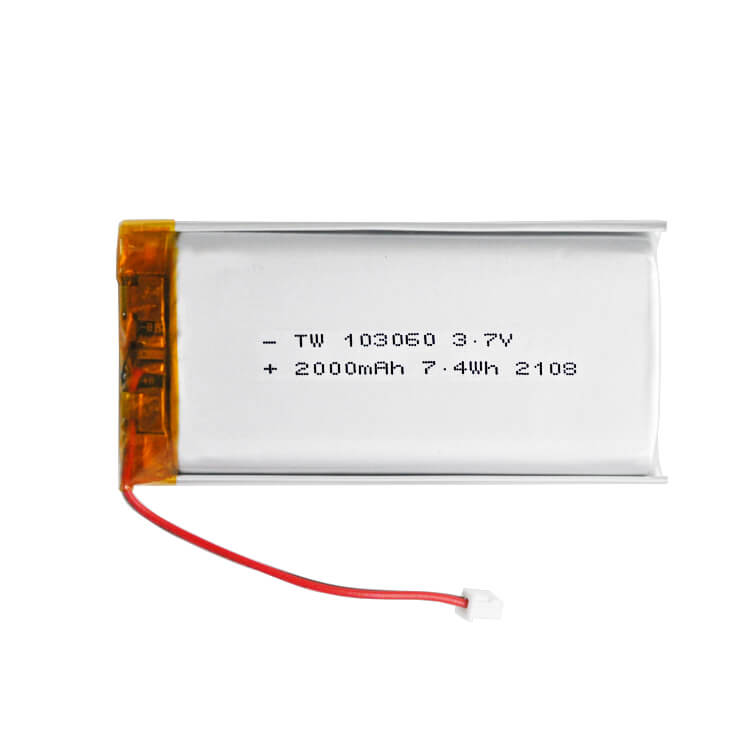
Lithium batteries can be roughly divided into two categories: lithium metal batteries and lithium-ion batteries. Lithium ion batteries do not contain metallic lithium and can be recharged. Lithium metal battery, the fifth generation of rechargeable battery, was born in 1996. Its safety, specific capacity, self discharge rate and performance price ratio are better than lithium-ion battery. Due to its own high-tech requirements, only a few countries' companies are producing such lithium metal batteries.
1. Life of soft packed lithium battery
(1) The theoretical service life of soft packed polymer lithium battery is more than 500 cycles. When used in 3C products, the service life is 3 to 5 years;
(2) The theoretical service life of soft packed lithium iron phosphate battery is about 1500 cycles. The battery life is more than 10 years with small current charge and discharge, and about 5 years with large current discharge;
2. Service life of steel shell lithium battery
(1) The theoretical service life of steel shell lithium-ion battery is 300 to 500 cycles, small current discharge, 2 to 3 years;
(2) The theoretical service life of the steel shell lithium iron phosphate battery is about 1000 cycles, and the low current discharge is about 3 years;
In fact, the ways in which users use lithium batteries are ever-changing. Because of different service conditions, the final actual service life of lithium batteries will be different. In fact, the number of cycles of lithium batteries is not only affected by the different use modes of users, but also related to the production technology level and material formula of the manufacturer of lithium batteries.
In fact, the cycle times obtained by different cycle systems are quite different. For example, the above other conditions remain the same. Only changing the constant voltage of 4.2V to the constant voltage of 4.1V to test the cycle life of the same type of battery. In this way, the battery is no longer in the deep charging mode. Finally, the cycle life times can be increased by nearly 60% If the cut-off voltage is increased to 3.9v for testing, the number of cycles should be increased several times.